

Welcome to A Day in the Life of a Designer, a series that explores real challenges design firms face and how to solve them with smart, sustainable strategies supported by the right tools. I’m Robert Stone, Director of Designer Experience at Studio Designer, where I help bridge the gap between how designers work and how technology supports that work in real life.
Over the years, I’ve met designers at every stage, from solo studios to large firms. One theme comes up repeatedly: how you present pricing matters as much as the numbers themselves. The presentation can either build confidence or invite doubts.
ALSO READ: “I Haven’t Updated My Billable Rates in Years” – Here’s Why (and How) to Raise Them Confidently
Why Presentation Style Shapes Perception
Every designer knows that communication is part of the craft. Proposals and presentations set the tone for trust and collaboration, especially when working with a new client. Some clients want transparency at the line-item level. Others prefer to see pricing as whole amounts rather than all the minutiae and details. Neither approach is right or wrong. The key is matching the presentation to your process and the relationship you have with your client.
For some clients, seeing every detail shifts their focus to small details like “Why is this fabric so expensive?” or “Can we cut this light?” The broader creative vision fades. A design concept lives in the total experience of a space. For clients who tend to get caught up in the details, presenting pricing by room can work better.
How Room-Based Pricing Keeps Conversations on Design
Room-based pricing does more than look tidy. It keeps conversations focused on design rather than individual prices.
When proposals are presented room by room, discussions center on flow, feeling, and function. A single lamp may seem costly when viewed alone, but its role in the full lighting plan makes sense in the context of a complete living room. The dialogue becomes about the experience of the space, not the cost of its parts.
A room-based approach can help clients connect emotionally with the design. They see value in the finished room and understand how each choice contributes to that vision.
Step 1: Create a Clean, Client-Focused Proposal
Start by setting up your proposal format in Studio Designer.
In Studio Designer:
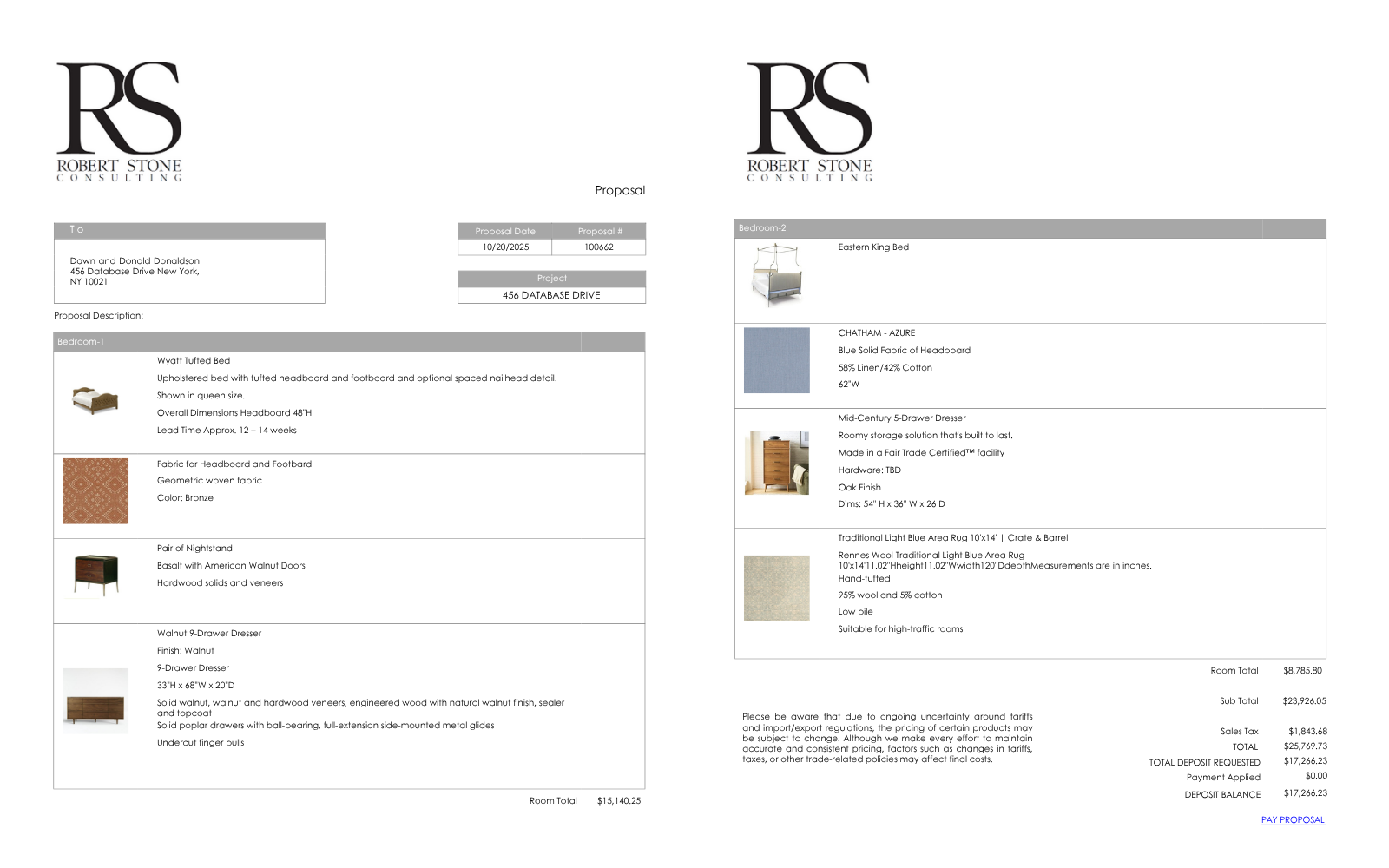
Generate a PDF proposal that includes all items and quantities but hides individual pricing. Each room will display a subtotal that combines cost, markup, and any applicable fees. The document will also show the project subtotal, tax, freight, and grand total.
A secondary benefit of this approach is that you don’t need to have every single item finalized before sending your proposal. If certain elements are still being sourced, you can include placeholders within the room total. This flexibility allows you to refine selections later without disrupting the client’s overall understanding of project costs.
The result is a proposal that reflects how designers naturally present their work. Clients can clearly see what each space includes without getting caught up in every number.
This structure also builds consistency between how you present design ideas and how you present pricing, reinforcing the trust between you and your client.
Step 2: Keep the View Consistent in StudioPay
A smooth client experience depends on consistency. Even the best proposal can lose impact if the online payment view looks different from what the client saw earlier.
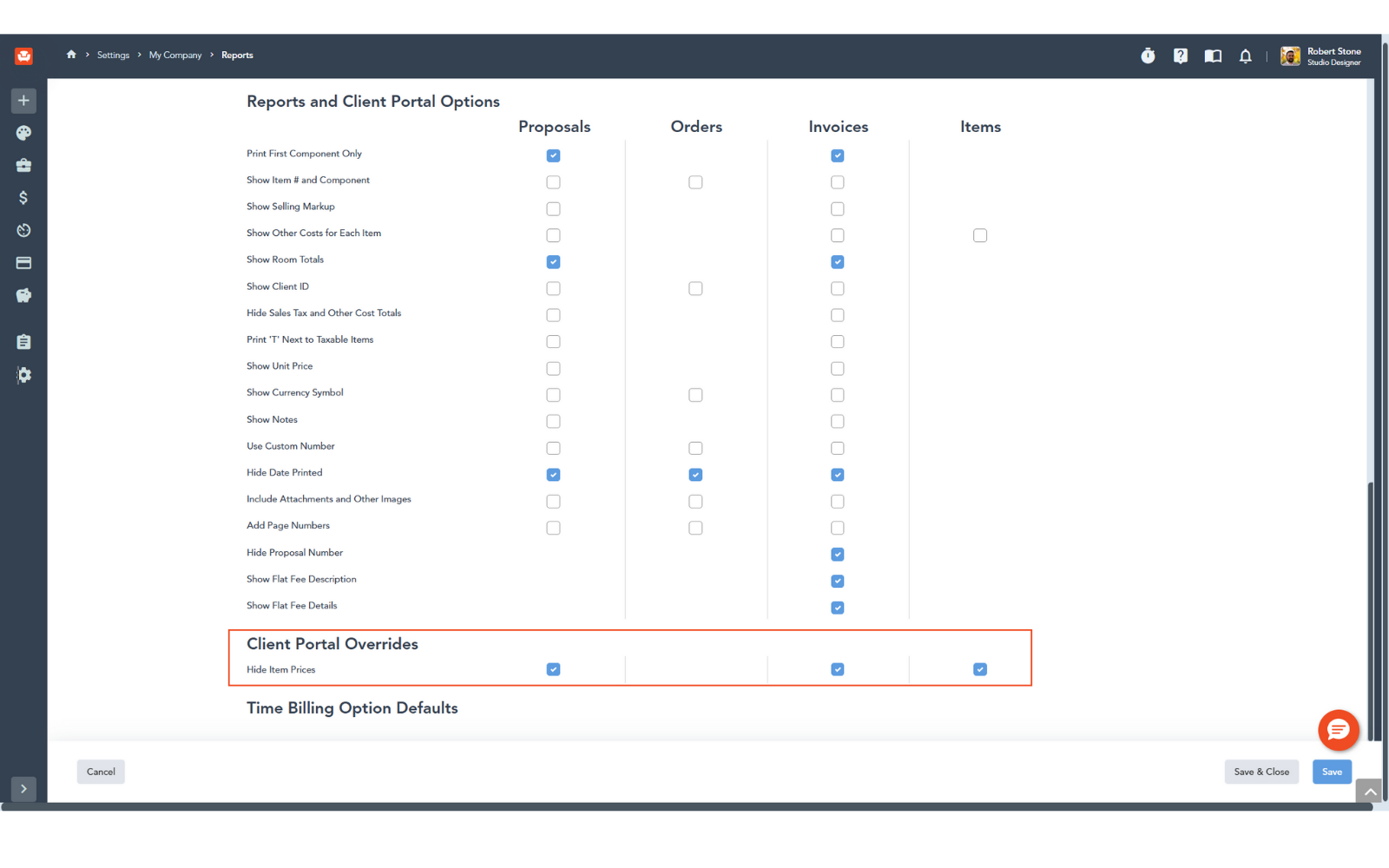
StudioPay makes online payments simple and seamless while keeping your proposals consistent. Built specifically for interior designers, it gives clients a secure, effortless payment experience. When creating a proposal for an entire room, just enable the Hide Item Pricing feature—clients will see clear room subtotals and project totals in both the PDF and online payment screen.
In Studio Designer:
Go to Settings → My Company → Report Defaults → Client Portal Override, and check Hide Item Pricing.
This format keeps things consistent across your initial presentation, your proposal, and your payment process.
Step 3: Turn Settings into Seamless Client Experience
A consistent formatting adds to client confidence. When clients see the same structure in every document and screen, they trust the process. It removes unnecessary questions and helps them stay focused on the broader, creative conversation.
This setup also saves time for designers. Fewer pricing questions means more time spent refining the design and moving the project forward.
Designing Proposals That Work for Every Client
How you present pricing shapes how clients experience your work. A thoughtful proposal means thinking about what works best for each client, whether they prefer to dive into the details or stay focused on the big picture.
With Studio Designer, you have the flexibility to adapt to every kind of client and conversation. There’s always that client who wants to see every single detail, down to the last fabric swatch, and the client that feels more comfortable focusing on the overall vision. Studio Designer’s highly configurable proposal tools build trust, streamline communication, and strengthen every relationship.
ALSO READ: Pricing Structures for Interior Designers: Build Profit into Every Project

Written by Robert Stone
Director of Client Experience
With over 20 years of experience in the design industry, Robert Stone brings both expertise and passion to his role as Director of Designer Experience at Studio Designer. He partners closely with Sales, Marketing, and Product teams to make sure designers have a seamless experience from first introductions to long-term partnership. Known for his deep understanding of the design community, Robert is dedicated to ensuring that every interaction with Studio Designer reflects our commitment to putting designers at the center of all we do.
Studio Designer is the leading digital platform for interior designers managing and growing their design businesses, featuring fully integrated project management, time billing, product sourcing, and accounting solutions.
Want to learn how Studio Designer can work for your design firm? Schedule a call with our team: https://www.studiodesigner.com/get-a-demo/
We can’t wait to connect.